SMS to Song
(山水相逢至宋)
7th. solo exhibition
2023
2023
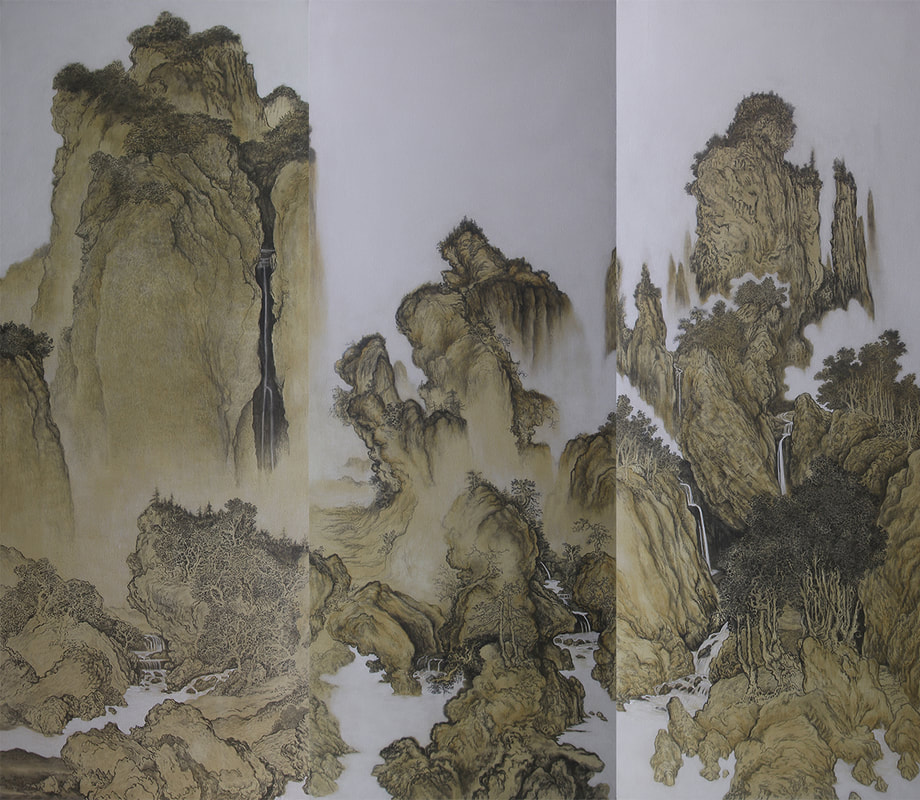
Come closer and you can see 1
200cm x 225cm -triptych
(each panel 200cm x 75cm)
Chinese ink and Acrylic on canvas
2023
200cm x 225cm -triptych
(each panel 200cm x 75cm)
Chinese ink and Acrylic on canvas
2023
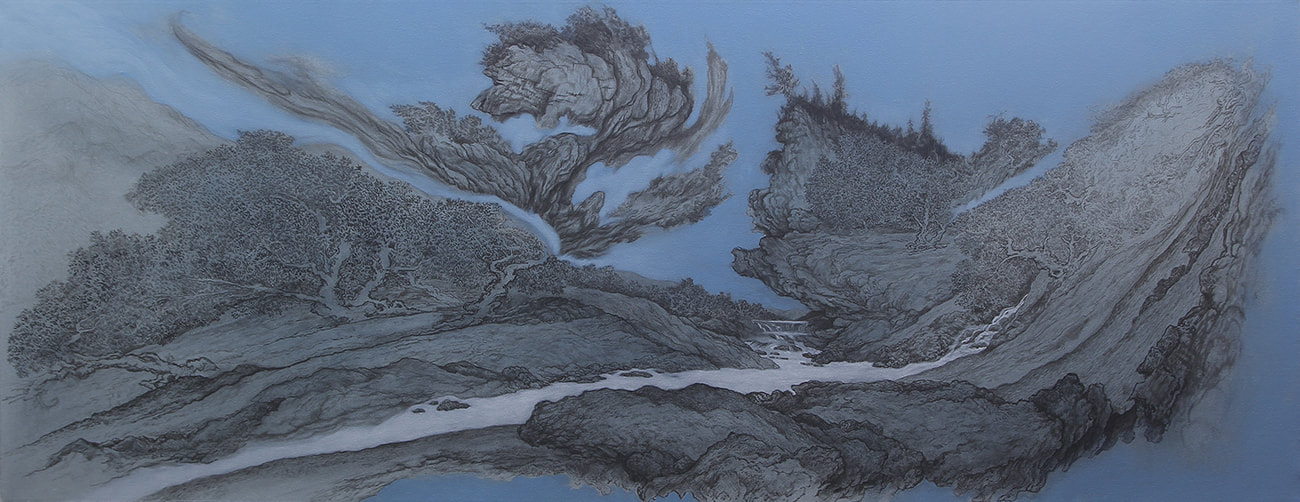
Come closer and you can see 2
75cm x 200cm
Chinese ink and Acrylic on canvas
2023
75cm x 200cm
Chinese ink and Acrylic on canvas
2023
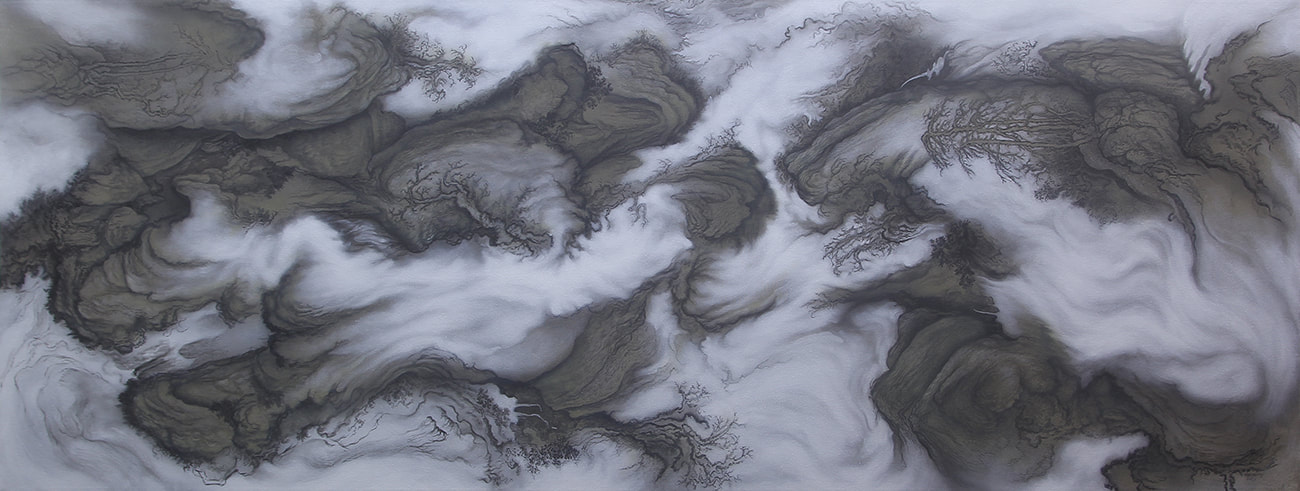
Come closer and you can see 3
75cm x 200cm
Chinese ink and Acrylic on canvas
2023
75cm x 200cm
Chinese ink and Acrylic on canvas
2023
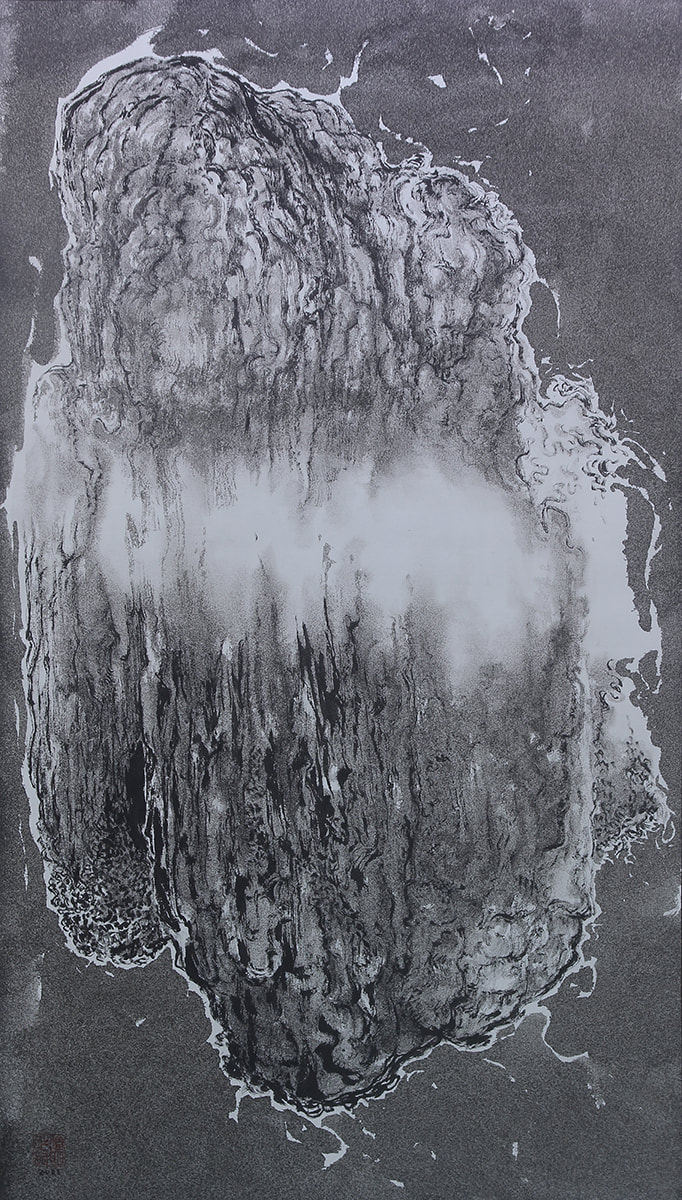
SMS 1
120cm x 69cm (scroll)
Chinese ink on xuan paper
2022
120cm x 69cm (scroll)
Chinese ink on xuan paper
2022
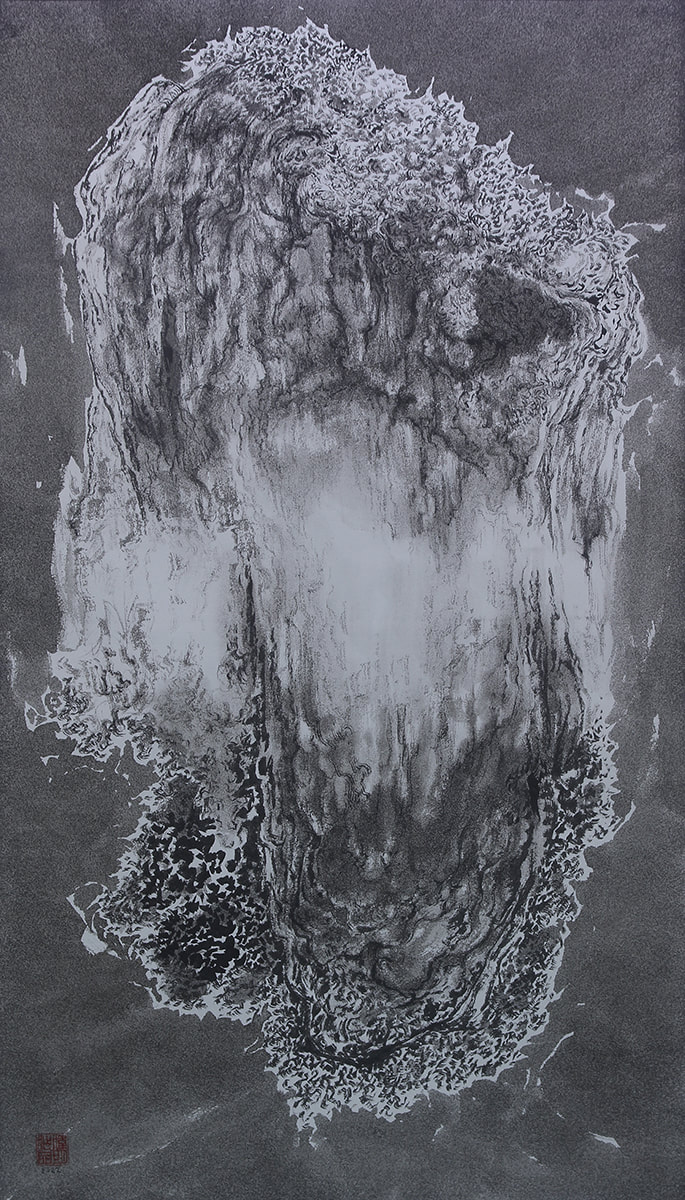
SMS 2
120cm x 69cm (scroll)
Chinese ink on xuan paper
2022
120cm x 69cm (scroll)
Chinese ink on xuan paper
2022
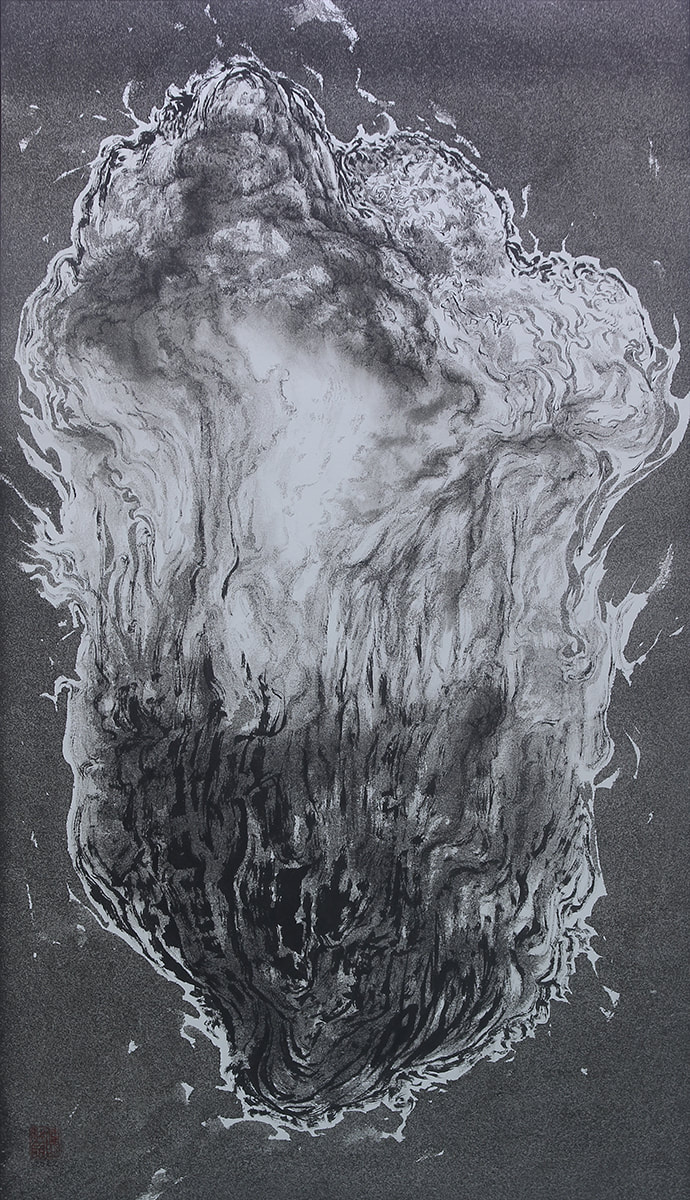
SMS 3
120cm x 69cm (scroll)
Chinese ink on xuan paper
2022
120cm x 69cm (scroll)
Chinese ink on xuan paper
2022
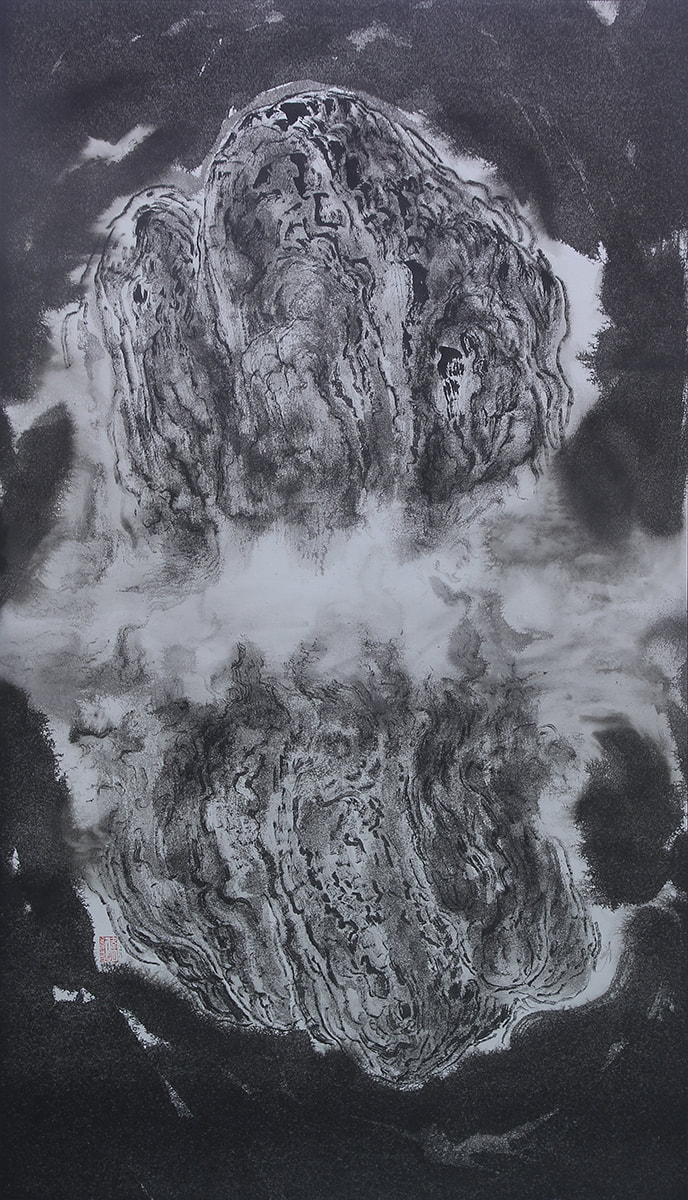
SMS 4
120cm x 69cm (scroll)
Chinese ink on xuan paper
2022
120cm x 69cm (scroll)
Chinese ink on xuan paper
2022
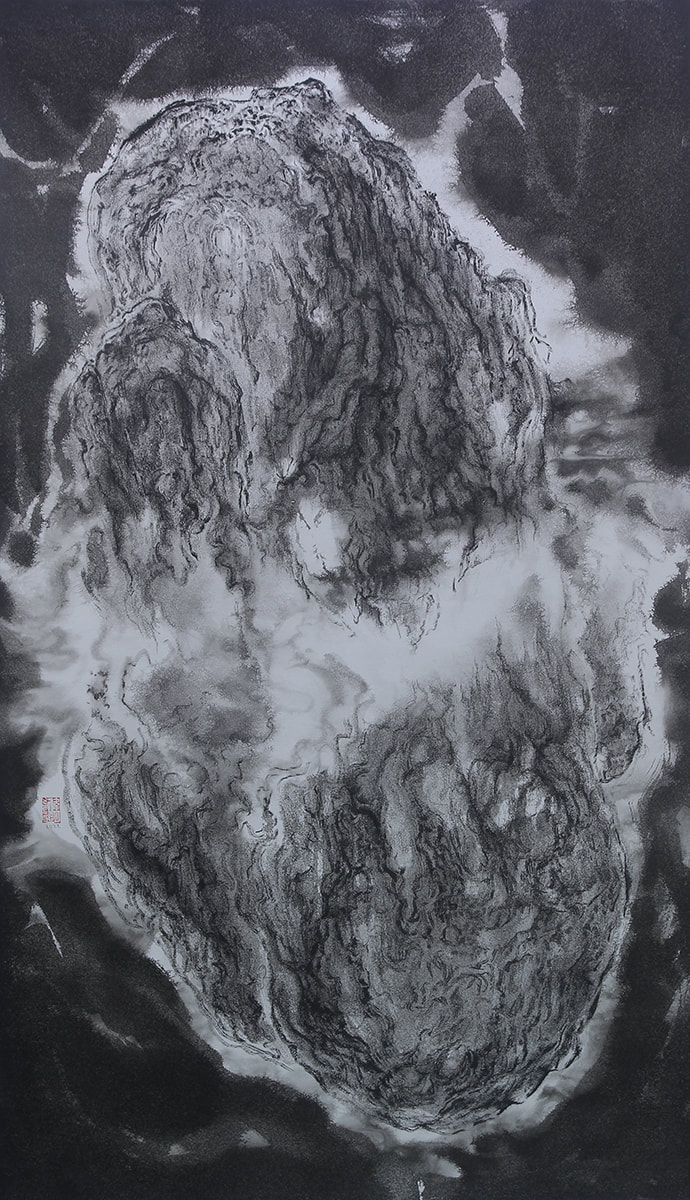
SMS 5
120cm x 69cm (scroll)
Chinese ink on xuan paper
2022
120cm x 69cm (scroll)
Chinese ink on xuan paper
2022
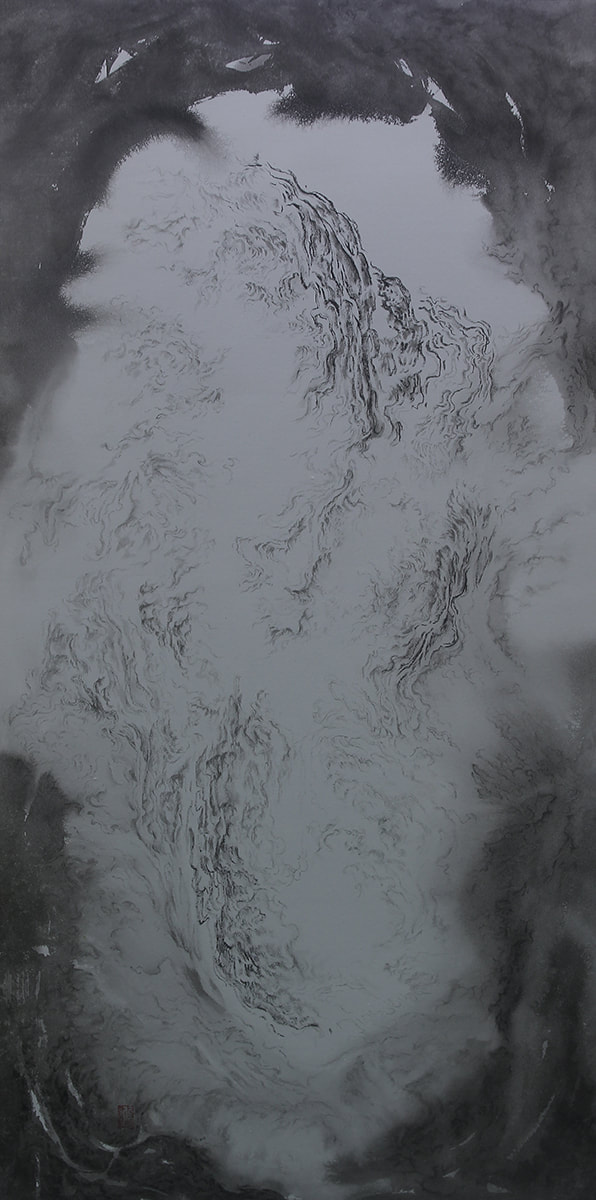
SMS 6
136cm x 68cm (scroll)
Chinese ink on xuan paper
2022
136cm x 68cm (scroll)
Chinese ink on xuan paper
2022
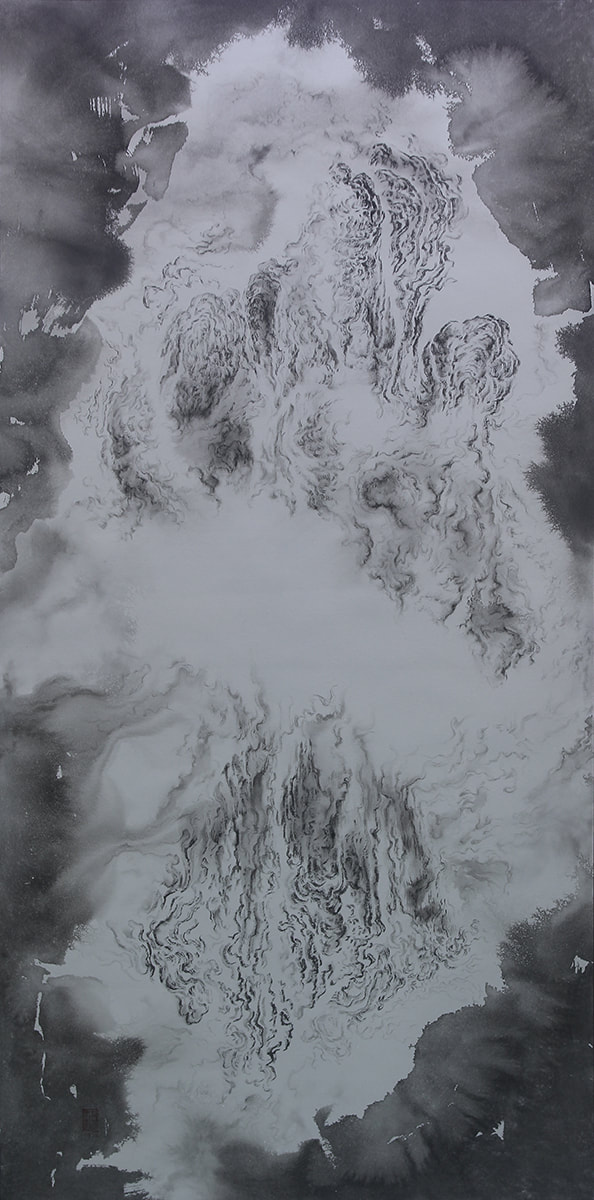
SMS 7
136cm x 68cm (scroll)
Chinese ink on xuan paper
2022
136cm x 68cm (scroll)
Chinese ink on xuan paper
2022
SMS to Song 山水相逢至宋
7th. solo exhibition (2023)
SMS to Song is my recent series, and the meaning of the title is: "Shan Met Shui to Song Dynasty". And the Song mentioned here more accurately will be: Song (960-1279) Landscape Painting.
Since 2019 my works have move on to a new stage, instead of clearly depicted I concentrate more on the flow of the landscape and the mysterious shape behind them, which I call this process as "the crystallization of my subconscious", and this is not a deliberately process, as I said the essence of oriental and Chinese philosophy is always on my mind so these works apparently reflect my mind state.
In the "Musang’s Words" series, I explored a lot on Yin-Yang, heaven and earth, real and virtual, black and white, expanding and contracting, and the most represented works in this direction were the works from "Shan Met Shui" series.
"Shan Met Shui" (山水相逢mountains and water met), it is to probe into the subject form and their existing meaning, one is about mountains and the other is water, and when I combine these two different elements together, they can blend together without any sense of conflict. The flow of water and the flow of mountains has made the picture in oneness; this is the way of natural tendency, all living things thrive without harming each other, and all paths run parallel without running against each other, and this is an authentic depiction of "you have me in you, I have you in me".
This new Shan Met Shui series the mountains (shan) occupy most of the space in the works, this is similarity to monumental landscape painting of Song (宋巨碑式山水画).
In this series the mountains were arranged in an upright and upside down position, this combination makes the mountains look huge and like a mirage, I am creating my works at the same time I salute to the great master of history, so to me it was like a mirage.
And the water (shui) this time I depict them without contour, instead of using line I use a lot of water to make them existing in the works, especially the last 4 works, at the end water had became one of the medium that I use, and this accidentally found method have perfectly shows the existent of water.
"Come closer and you can see" is a triptych work, it content 3 of the Song Dynasty representative works, Fan Kuan's "Travelers Among Mountains and Streams" (范寬, 谿山行旅圖), Guo Xi's "Early Spring" (郭熙, 早春圖) and Li T'ang's "Windy Pines Among a Myriad Valleys" (李唐, 萬壑松風圖). These 3 works they are all very important monumental landscape painting of Song (宋巨碑式山水画).
About these 3 works I don't have to descript to detail as there are so many deep description articles on the internet, what I am concerned about is from these 3 works what I have seen and learned, I will say it is an attitude of appreciating landscape. From these 3 works it is quite easy to noticed that the angle of these works it is not logic, from a normal human vision you cannot see different angle at the same time, there are multiple focus point in these works, and during that era why they painted this way, don't think it too complex, they are portraying with their own personal touch after years of nature observation, this is free oneself from formal constraints and the works become more vivid, this reminds me of a words from film director King Hu (胡金铨): "Western art is to imitate nature, but Chinese art is to experience nature and express what you want in your heart through painting". And now what I have seen and learned is the spiritual meaning of landscape painting.
"Come closer and you can see" this title it is a words that I tell myself, when I was young when I saw this "Chinese style of shan shui painting", I always wonder why they all look the same, they are so uninteresting to me, but after my life have past more than a half century, finally now I just arrive at it's doorway and begin to enter to the realm of this magnificent mountains, it is not merely a "Chinese style of shan shui painting", there are countless paths of life, regardless of the geographical distance, regardless of the time, as long as we have the courage to open the door, there will always be a path on which we will have wonderful collisions and encounters.
Chen Wei Meng 2023
7th. solo exhibition (2023)
SMS to Song is my recent series, and the meaning of the title is: "Shan Met Shui to Song Dynasty". And the Song mentioned here more accurately will be: Song (960-1279) Landscape Painting.
Since 2019 my works have move on to a new stage, instead of clearly depicted I concentrate more on the flow of the landscape and the mysterious shape behind them, which I call this process as "the crystallization of my subconscious", and this is not a deliberately process, as I said the essence of oriental and Chinese philosophy is always on my mind so these works apparently reflect my mind state.
In the "Musang’s Words" series, I explored a lot on Yin-Yang, heaven and earth, real and virtual, black and white, expanding and contracting, and the most represented works in this direction were the works from "Shan Met Shui" series.
"Shan Met Shui" (山水相逢mountains and water met), it is to probe into the subject form and their existing meaning, one is about mountains and the other is water, and when I combine these two different elements together, they can blend together without any sense of conflict. The flow of water and the flow of mountains has made the picture in oneness; this is the way of natural tendency, all living things thrive without harming each other, and all paths run parallel without running against each other, and this is an authentic depiction of "you have me in you, I have you in me".
This new Shan Met Shui series the mountains (shan) occupy most of the space in the works, this is similarity to monumental landscape painting of Song (宋巨碑式山水画).
In this series the mountains were arranged in an upright and upside down position, this combination makes the mountains look huge and like a mirage, I am creating my works at the same time I salute to the great master of history, so to me it was like a mirage.
And the water (shui) this time I depict them without contour, instead of using line I use a lot of water to make them existing in the works, especially the last 4 works, at the end water had became one of the medium that I use, and this accidentally found method have perfectly shows the existent of water.
"Come closer and you can see" is a triptych work, it content 3 of the Song Dynasty representative works, Fan Kuan's "Travelers Among Mountains and Streams" (范寬, 谿山行旅圖), Guo Xi's "Early Spring" (郭熙, 早春圖) and Li T'ang's "Windy Pines Among a Myriad Valleys" (李唐, 萬壑松風圖). These 3 works they are all very important monumental landscape painting of Song (宋巨碑式山水画).
About these 3 works I don't have to descript to detail as there are so many deep description articles on the internet, what I am concerned about is from these 3 works what I have seen and learned, I will say it is an attitude of appreciating landscape. From these 3 works it is quite easy to noticed that the angle of these works it is not logic, from a normal human vision you cannot see different angle at the same time, there are multiple focus point in these works, and during that era why they painted this way, don't think it too complex, they are portraying with their own personal touch after years of nature observation, this is free oneself from formal constraints and the works become more vivid, this reminds me of a words from film director King Hu (胡金铨): "Western art is to imitate nature, but Chinese art is to experience nature and express what you want in your heart through painting". And now what I have seen and learned is the spiritual meaning of landscape painting.
"Come closer and you can see" this title it is a words that I tell myself, when I was young when I saw this "Chinese style of shan shui painting", I always wonder why they all look the same, they are so uninteresting to me, but after my life have past more than a half century, finally now I just arrive at it's doorway and begin to enter to the realm of this magnificent mountains, it is not merely a "Chinese style of shan shui painting", there are countless paths of life, regardless of the geographical distance, regardless of the time, as long as we have the courage to open the door, there will always be a path on which we will have wonderful collisions and encounters.
Chen Wei Meng 2023
Essay and video from Wei-Ling Gallery:
Essay: Brushing Harmony: The Alluring Syncretism Between Man and Nature
Written by Amanda Ariawan | Edited by Valencia Winata
weiling-gallery.com/gallery/wp-content/uploads/2023/04/Chen-Wei-Meng-Essay-Final.pdf
(Artist) Wei-Ling Gallery
www.youtube.com/watch?v=40ZLWcCNziE
Essay: Brushing Harmony: The Alluring Syncretism Between Man and Nature
Written by Amanda Ariawan | Edited by Valencia Winata
weiling-gallery.com/gallery/wp-content/uploads/2023/04/Chen-Wei-Meng-Essay-Final.pdf
(Artist) Wei-Ling Gallery
www.youtube.com/watch?v=40ZLWcCNziE